Leftovers and half-used ingredients
How to freeze small portions
Use small portions safely and practically with small-household meal ideas, storage guidance and low-waste tips for one or two.
By the Susan Cooks editorial team · Last reviewed 9 September 2026
At a glance
Quick answer
If it has been stored safely, use one meal or one ingredient portion per container in 125ml sauce tubs, flat bags of cooked mince, single chicken portions, one-person soup containers. Cool cooked food promptly, package it as soon as it is cold, label it clearly and freeze before its refrigerated storage time runs out. When in doubt about how long it has been out or refrigerated, discard it.
Quick ideas for small portions
| Use | Amount | Add | Best for |
|---|---|---|---|
| 125ml sauce tubs | one meal or one ingredient portion per container | vegetables and seasoning | next meal |
| flat bags of cooked mince | a small portion | a measured starch | next meal |
| single chicken portions | a small portion | an egg or beans | a flexible plan |
| one-person soup containers | a small portion | a simple sauce | a flexible plan |
Check it before planning a meal
Leftovers are useful only when they were cooled and stored safely. Cool cooked food promptly, package it as soon as it is cold, label it clearly and freeze before its refrigerated storage time runs out. If you cannot remember when the food was cooked or opened, do not build another meal around it.
Thaw in the fridge, follow original food guidance and reheat cooked dishes only once until steaming hot. Look for the practical facts first: when it was prepared, how it was cooled, whether it stayed refrigerated and whether it has already been reheated. Appearance alone cannot confirm that badly stored food is safe.
Four good uses for small portions
The most useful options are 125ml sauce tubs, flat bags of cooked mince, single chicken portions, one-person soup containers. Choose the idea that uses other food already open rather than buying several new ingredients to rescue one small remainder.
Keep the transformation simple. Change the texture with crisp edges, add freshness with lemon or herbs, or provide contrast with a spoonful of yoghurt. The aim is a pleasant second meal, not disguising food that is past its best.
A meal for one
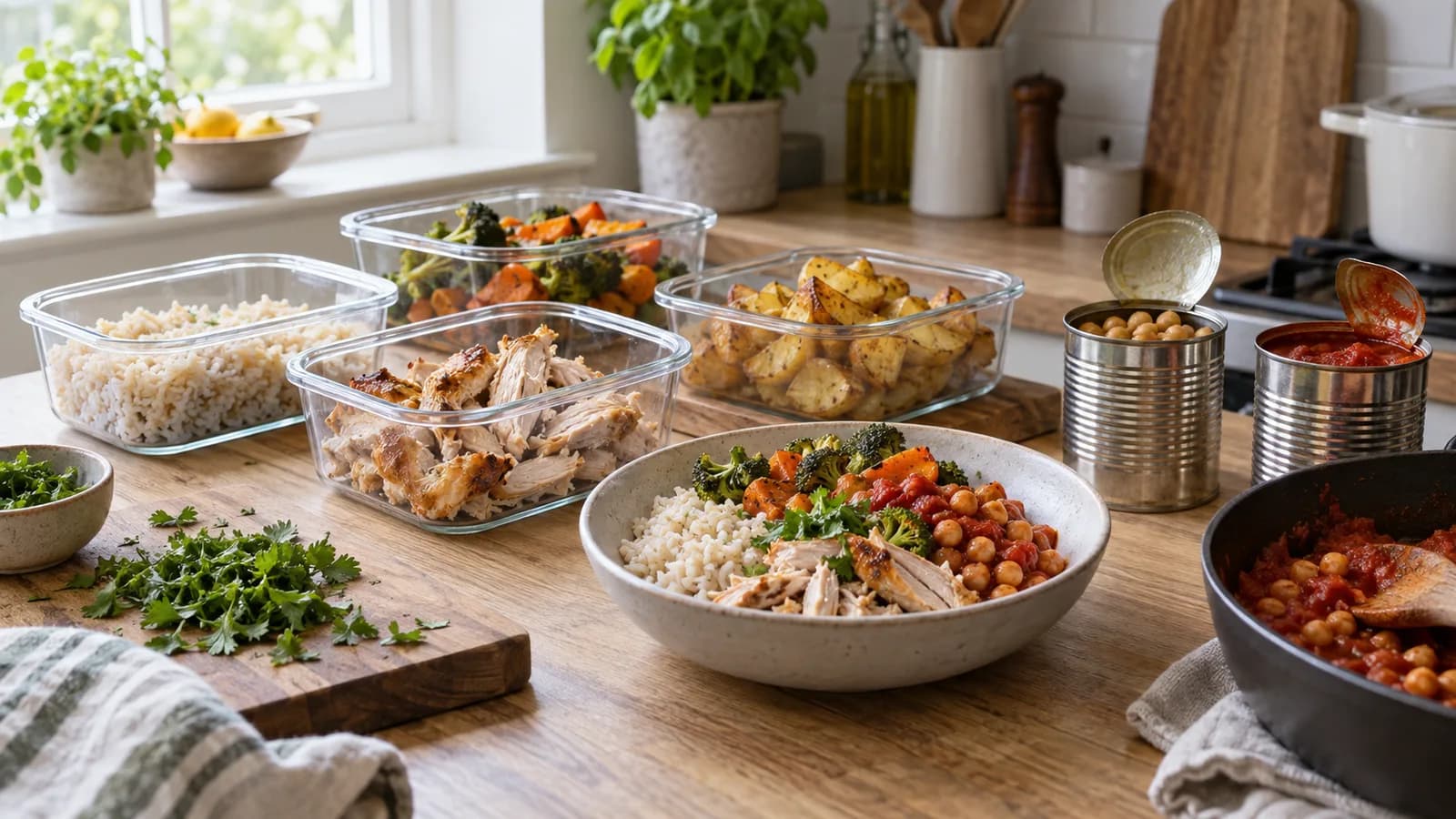
For one person, one meal or one ingredient portion per container is enough to anchor or support one modest meal. Put it on the worktop with one vegetable, one starch or protein if needed, and a familiar seasoning. This visible group is easier to use than searching for a recipe with an exact list.
Cook only the fresh additions required for the plate. If the leftover has already been reheated once, use it cold only when appropriate and safely stored, or choose another ingredient rather than heating it again.
A meal for two
For two, use the leftover as one component rather than expecting a small amount to carry both plates. Add vegetables, beans, eggs, rice, pasta or potatoes in measured amounts. A frittata, grain bowl, soup or traybake distributes a modest remainder naturally.
Taste before adding salt because cooked ingredients and sauces may already be seasoned. Divide the finished meal evenly, and avoid making another spare batch unless it has a clear destination.
Add flavour without buying more
Useful cupboard flavours include mustard, dried herbs, curry powder, smoked paprika, soy sauce, lemon juice and vinegar. Choose one direction. Too many sauces can muddy the food and create more open jars than the original leftover solved.
Freshness often matters more than richness. A squeeze of lemon, chopped parsley, black pepper or a few sliced spring onions can make reheated food feel deliberate. Add delicate ingredients after reheating so they stay bright.
Storage and labelling
Use clean, shallow containers with close-fitting lids. Label the contents and date rather than trusting memory. Put older food where it can be seen, not behind unopened groceries, and check the fridge before starting the next meal plan.
Small households benefit from small containers. They cool efficiently, make portions obvious and prevent repeatedly opening a large tub. Keep raw and cooked food separate and clean utensils between them.
Freezing a small remainder
Freeze only food that is still within its safe refrigerated life and suitable for freezing. Portion before freezing, remove excess air where possible and label both the item and date. A flat portion saves space and usually thaws more evenly.
Thaw in the fridge unless the product or recipe explicitly supports cooking from frozen. Some foods change texture after freezing; use softened vegetables in soup and separated creamy sauces in a gently heated dish where they can be stirred smooth.
Common leftover mistakes
Do not leave a pan at room temperature for the evening, put an open tin straight into the fridge, combine leftovers of unknown ages, or assume reheating repairs poor storage. Avoid adding fresh food to an old container without washing it first.
The low-waste choice is not always to eat something. Safe disposal is better than stretching uncertain food. Waste prevention begins earlier: cook a sensible portion, cool intentional extras promptly and give every stored item a clear next use.
Frequently asked questions
How long can I keep small portions?
Cool cooked food promptly, package it as soon as it is cold, label it clearly and freeze before its refrigerated storage time runs out.
What is the easiest use for small portions?
125ml sauce tubs is a practical first choice because it works well in a small portion.
Can I freeze it?
Freeze promptly only when the ingredient and original recipe are suitable; label one-meal portions and thaw safely in the fridge.
Can I reheat it twice?
Avoid repeated reheating. Reheat one portion once until steaming hot throughout.
What if I do not know when it was cooked?
Discard it. A new meal is not worth guessing about food storage.