Portion Guides
How much pasta per person?
Calculate how much dry or fresh pasta to cook per person, with practical quantities for one, two, four and six people.
By the Susan Cooks editorial team · Last reviewed 23 July 2026
At a glance
Quick answer
For a main meal, allow 75–100g (2¾–3½ oz) dried pasta, 115–150g (4–5¼ oz) fresh pasta, or 150–200g (5¼–7 oz) filled pasta per adult. For two people, start with 150–200g dried pasta. Rich sauce and substantial vegetables can make the lower end sufficient.
Main-course pasta portions
| People | Dried pasta | Fresh pasta | Filled pasta |
|---|---|---|---|
| 1 | 75–100g (2¾–3½ oz) | 115–150g (4–5¼ oz) | 150–200g (5¼–7 oz) |
| 2 | 150–200g (5¼–7 oz) | 230–300g (8–10½ oz) | 300–400g (10½–14 oz) |
| 4 | 300–400g (10½–14 oz) | 460–600g (1–1⅓ lb) | 600–800g (1⅓–1¾ lb) |
| 6 | 450–600g (1–1⅓ lb) | 690–900g (1½–2 lb) | 900g–1.2kg (2–2⅔ lb) |
Dried, fresh and filled pasta
Dried pasta absorbs water, so its starting weight is lower. Fresh egg pasta contains moisture and needs a larger raw portion. Filled pasta already includes cheese, meat or vegetables, so it is heavier still. Use the packet’s serving guidance when a product is unusually large or heavily filled.
How much spaghetti per person without scales
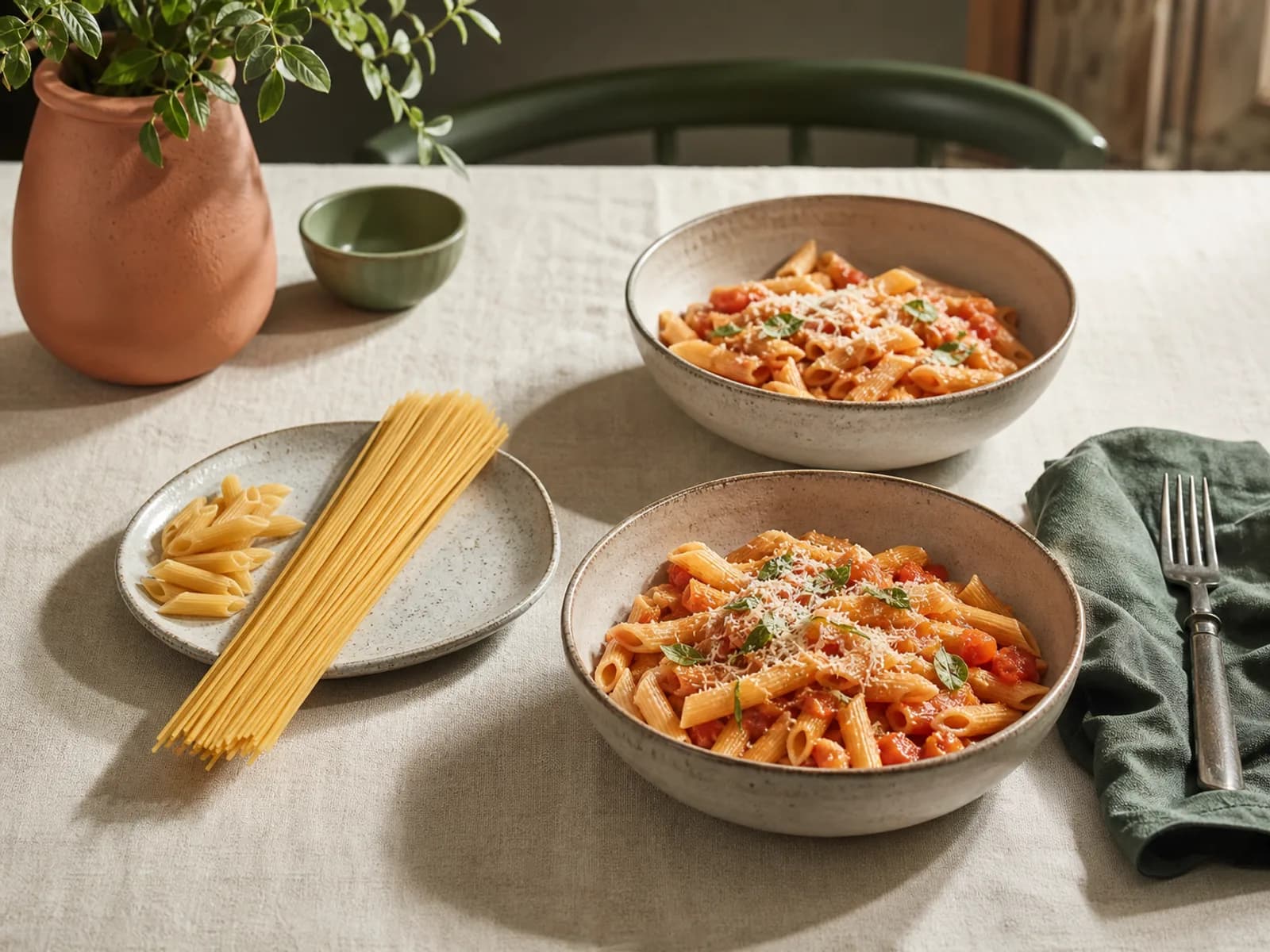
A bundle of dry spaghetti about 22–24mm across is a rough 75–90g portion. A pasta measure is more repeatable, but your hand is only a guide because strand thickness varies. Weigh once, notice the bundle size, and use that visual reference next time.
Main-course versus side portions
Use 75–100g dried pasta for a main. For a pasta salad served among several dishes, 50–60g dry per person may be enough. Do not shrink a main-course portion without accounting for the protein, vegetables and sauce served with it.
Portions for children
Children’s needs vary by age, appetite and the rest of the meal, so avoid treating one number as a rule. Start with a smaller serving, keep extra pasta and sauce available, and follow professional dietary advice where a child has specific needs.
How sauce changes the serving
A vegetable-rich tomato sauce, beans, chicken or prawns add bulk, making 75g dried pasta a satisfying main. A light butter or oil dressing may need pasta nearer the upper end. For two, around 250–350ml sauce is often practical, but thick pesto needs much less than loose tomato sauce.
Cooking pasta for two
Measure 150–200g dried pasta before heating the water. Choose a pan large enough for the pasta to move, reserve a mug of cooking water, and finish the pasta in the sauce. This gives a better result than cooking a whole packet and storing an accidental surplus.
Storing leftover pasta
Cool cooked pasta promptly and refrigerate it within two hours in a covered container. The Food Standards Agency advises eating ordinary leftovers within 48 hours or freezing them. Reheat only once until steaming hot throughout; chilled pasta salad should remain properly cold.
Common pasta portion mistakes
Do not compare the weight of dry pasta directly with fresh or filled pasta. Avoid using the whole packet merely because it is open, and remember that a heavy sauce changes how much pasta feels satisfying. Keep sauce and pasta proportionate so neither is left behind.
Relevant recipes
Frequently asked questions
How much dried pasta should I cook per person?
Allow 75–100g per adult for a main meal, depending on appetite and the amount of sauce and other ingredients.
How much pasta should I cook for two?
Start with 150–200g dried pasta, 230–300g fresh pasta or 300–400g filled pasta.
Is spaghetti measured differently from other dried pasta?
Use the same 75–100g main-course range; only the practical way of measuring the long strands differs.
Sources and review notes
Quantities are practical starting points rather than nutritional prescriptions. Food-safety passages were reviewed against current UK guidance on 23 July 2026.