Chicken
How to cook chicken thighs
Simple guide to cooking chicken thighs in the oven, pan or air fryer, with timing tips, doneness guidance and easy serving ideas.
At a glance
Quick answer
Roast bone-in thighs at 200°C/180°C fan for roughly 35–45 minutes. Boneless thighs are usually quicker at 25–30 minutes. Check the thickest part reaches 75°C without touching bone.
Bone-in vs boneless thighs
Bone-in, skin-on thighs take longer but give crisp skin and rich pan juices. Boneless thighs cook quickly and are easy to slice into bowls, curries and pasta.
Oven method
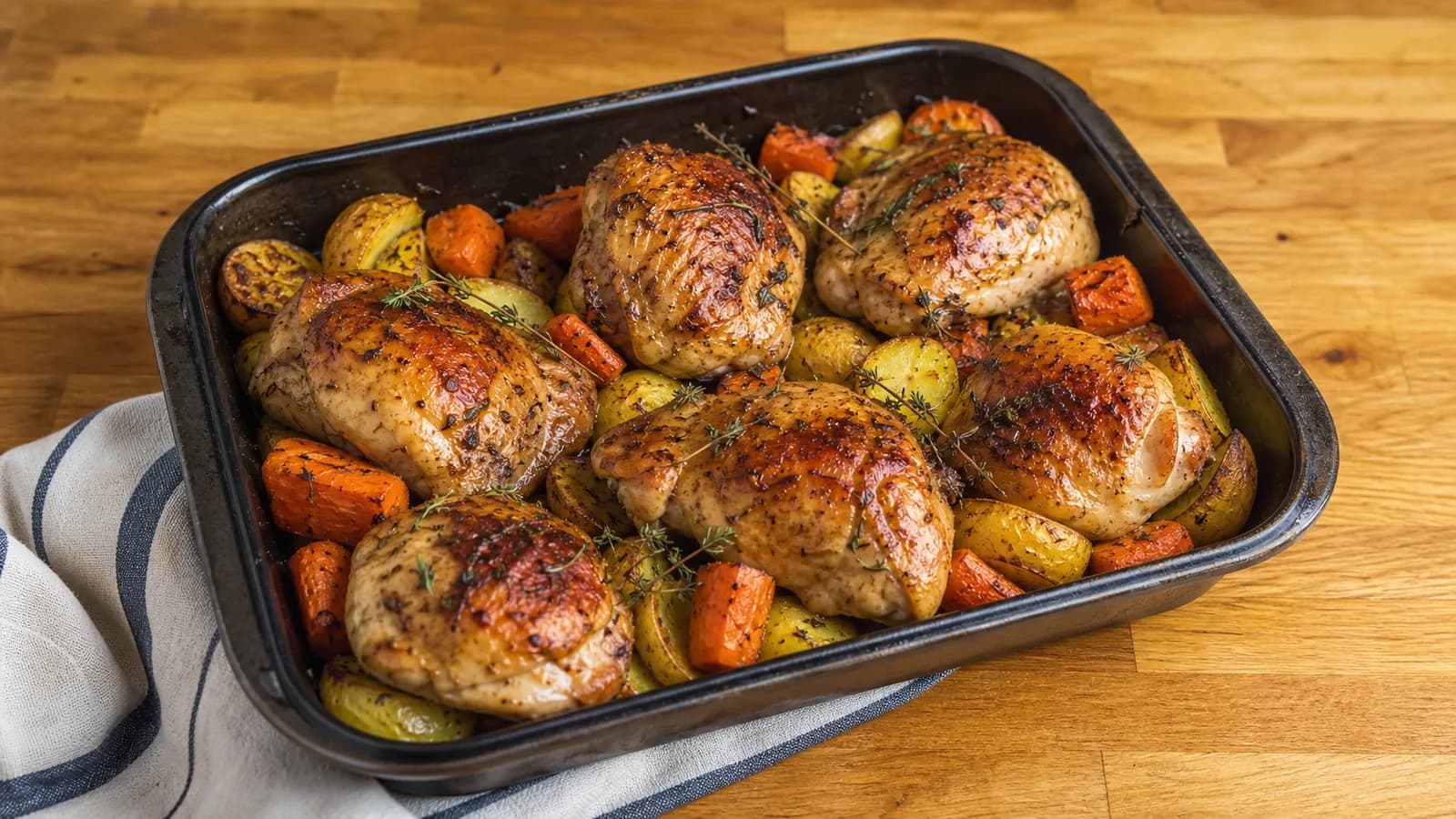
Dry the skin, rub lightly with oil and season. Arrange skin-side up with space between pieces and roast until browned and 75°C at the thickest part.
Pan method
Open boneless thighs flat in a lightly oiled pan. Cook over medium heat, turning once, until deeply coloured and cooked through. Lower the heat if they catch.
Air fryer method
Place thighs in one layer. Cook at about 190°C, turning boneless pieces once; allow roughly 16–22 minutes boneless or 22–28 minutes bone-in, then verify 75°C.
How long to cook chicken thighs
Times are a guide because thickness, starting temperature and appliances vary. Use the visual checks in the method as well as the clock.
Bone makes timing less predictable. Check beside the bone in the thickest piece, without letting the probe touch it.
Serving ideas for one or two
Roast two thighs above potatoes and carrots, or slice boneless thighs over rice with steamed broccoli. Cool spare cooked chicken promptly and refrigerate for a second meal.
For one person, cook one portion rather than making a full family batch. For two, double the main ingredient but keep an eye on pan space: crowding food traps steam and slows browning.
Common mistakes
Crowding prevents crisp skin. Starting with wet skin and turning too often also reduce browning. Never use the raw-chicken plate for cooked thighs.
Cooking one or two portions
For one person, prepare one measured portion of the main ingredient and choose cookware that keeps it easy to turn, cover or check. For two, double the food but only when both portions still fit comfortably. A crowded pan or basket traps steam, while an oversized saucepan can lose moisture too quickly.
Keep pieces similar in thickness so they finish together. If one is clearly smaller, begin checking it first and remove it when ready rather than leaving it to dry out while the larger piece catches up. This simple habit matters more than following an exact minute from another kitchen.
Planning the rest of the plate
Keep the rest of the meal straightforward while learning the method. Add one measured starch and one or two vegetables that cook reliably, then finish with lemon, herbs, black pepper or a familiar sauce. This gives you room to pay attention to the main ingredient instead of coordinating several unfamiliar techniques.
For a one-person meal, frozen peas, spinach or broccoli are useful because the exact amount can be removed from the bag. For two, choose ingredients that can share an oven temperature or be cooked while the main item rests.
Storing and using a spare portion
Only cook an extra portion when it has a clear use. Cool cooked food promptly, transfer it to a clean shallow container and refrigerate within the guidance given above or on the original packet. Label freezer portions with the food and date, and thaw in the fridge unless the product instructions say otherwise.
Reheat only the amount you intend to eat and make sure it is steaming hot throughout where reheating is appropriate. A spare portion can become a rice bowl, pasta dish, salad, frittata filling or jacket-potato topping, depending on the ingredient. Keep wet sauces separate from anything you want to remain crisp.
A repeatable beginner routine
Read the whole method, clear a safe work area and measure everything before applying heat. Set an early timer, but use the stated visual or temperature checks to decide when the food is ready. Move cooked food to a clean plate and note any small adjustment your hob, oven or air fryer needed.
The next time, change only one thing: a slightly lower heat, a smaller pan or an earlier check. Repeating the same basic method with one controlled adjustment builds useful judgement and is more dependable than trying a completely different technique every time.
How to judge when it is ready
Use the clock to decide when to start checking, then use the doneness signs in this guide. Look at the thickest piece or firm middle rather than an edge that naturally cooks first. A clean skewer, fork or small knife can help with vegetables and potatoes; meat and fish need the specific safety checks explained above.
If the food needs longer, continue in short steps. Two or three extra minutes followed by another check gives more control than adding a large block of time. Note whether your pan, oven or air fryer usually runs faster or slower, because that observation will make the next batch more predictable.
A repeatable beginner routine
Read the method once before heating the pan or appliance. Measure the portion, prepare every ingredient, choose a timer and put a clean plate or container nearby. Starting calmly prevents the common scramble in which food overcooks while a missing tool or seasoning is found.
After the meal, write down the amount, cookware and actual time that worked. Change only one thing on the next attempt—slightly less heat, a thinner piece or a shorter first check. Building a dependable method from your own kitchen is more useful than searching for a different exact time every time you cook.
Recipes and guides to try next
Frequently asked questions
Are chicken thighs cooked when the juices run clear?
Clear juices help, but a thermometer reading of 75°C in the thickest part is a more reliable check.
Can I cook thighs from frozen?
Defrost safely in the fridge first for more even, predictable cooking.
Can I use the same method for one and two portions?
Usually yes, provided both portions fit without crowding. The cooking time may stay similar, but begin checking early.
Why does my cooking time differ from the guide?
Thickness, starting temperature, cookware and appliance strength all affect timing. Use the doneness checks as well as the clock.
Should I cook an extra portion?
Only when it has a planned meal or freezer destination and can be cooled and stored safely.